





Most developers use AI agents the way they come out of the box — throw files at a context window and hope for the best. Our second YozmaTalk showed a different approach.
Vitalii Chepurko — Senior Software Engineer at OX Security with 16+ years in Python, distributed systems, and cloud — walked us through vc-context, his own side project: a three-tier RAG system built to give AI agents actual knowledge of a codebase instead of context-window guesswork.
What we covered
The session started from the problem that pushed Vitalii to build this in the first place: on large repositories, it’s hard to know whether an agent is really seeing the context it needs or just guessing. Reading every file directly is slow, burns tokens fast, and doesn’t guarantee better answers.
His answer is a pre-built, three-layer index of the codebase: structural (symbols, rows, tests), semantic (embeddings stored in a local database), and an access layer over MCP that lets an agent — Claude, Codex, or others — query that index directly instead of re-reading files every time.
The live demo
The core of the session was a live benchmark on two real repositories (a FastAPI demo and his own vc-context project), comparing how many tokens/bytes an agent burns on direct bash commands versus queries through the MCP context layer. Despite some connection and local-model hiccups, the demo showed a real difference: the “read slice” command (reading just the relevant chunk of a file instead of the whole thing) consistently saved the most tokens, while “find symbol” was sometimes slower than a plain bash command, though more precise.
The key number from Vitalii’s own tracking: roughly 55% token savings on average for one project, and about 1.3 million tokens saved across 1,000 calls over the last 30 days at scale. He was upfront that these are estimates — exact token accounting is hard, and results vary from run to run even on the same project.
Local models — a matter of trust
One thing Vitalii spent real time on: why his semantic search runs on a small local model (Ollama, 137 million parameters) instead of an external API. The main reason is control over your code — if you’re calling someone else’s model over the internet, you don’t really know where your code and tokens end up. A local model is slower, but it gives you confidence nothing is leaking out.

What’s next
Vitalii was candid about the current gaps: automatic framework and file-role detection (auto-mapping), support for more languages (currently Python and Angular), the option to plug in cheaper external models at the top layer, and the fact that the index can go stale and currently needs to be rebuilt manually with a single command.
Key takeaways
- Letting an agent read files directly isn’t always the fastest or cheapest option — a pre-built index (structural + semantic) can cut token usage significantly
- A “read slice” command (reading just the needed chunk of a file) saves more tokens than reading the whole file
- Local models for semantic search are slower, but keep you in control of where your code goes
- Treat token-savings numbers as estimates — results vary from run to run, even on the same project
- The codebase index goes stale and currently requires manual reindexing
- This isn’t a one-of-a-kind tool — Vitalii stressed that anyone can build something similar for their own needs, and invited the audience to try or extend his approach


🎬 Watch the Recording
Previous sessions
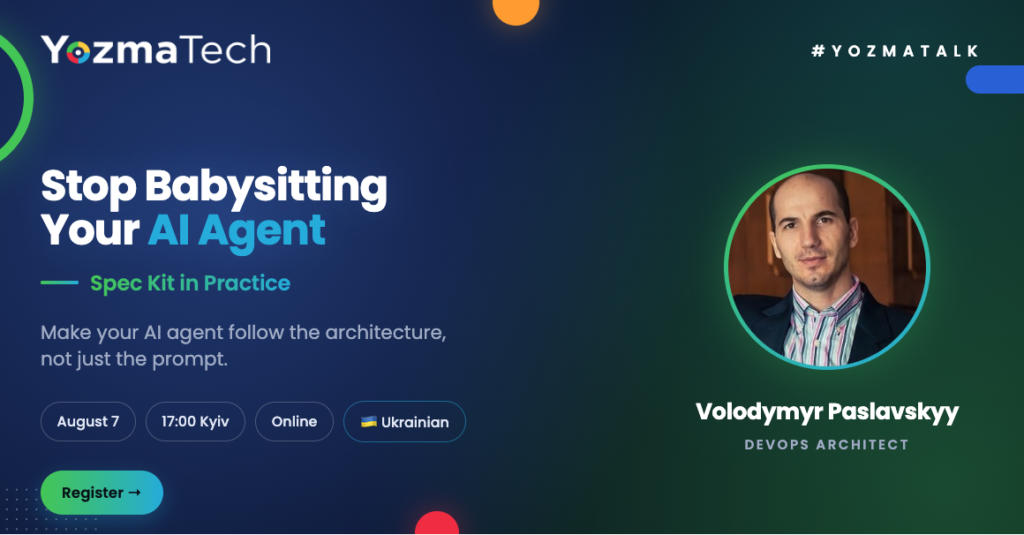
5 August 2026
Stop Babysitting Your AI Agent
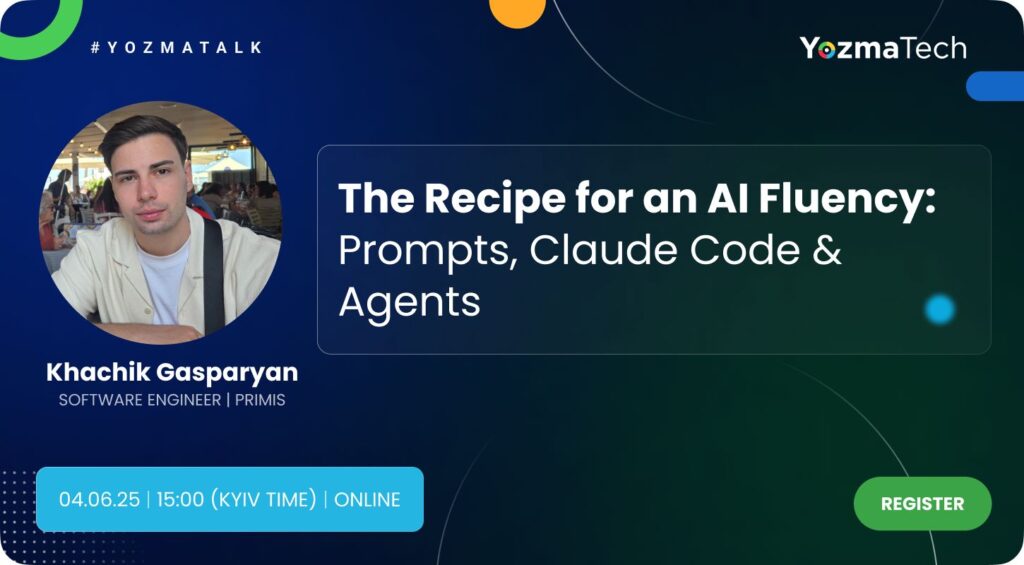
4 June 2026
The Recipe for an AI Fluency
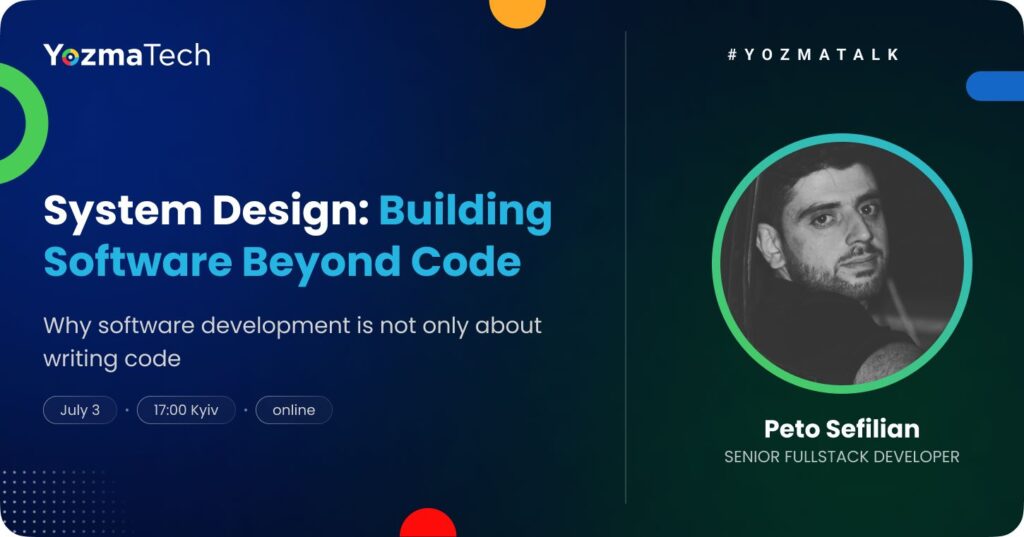
3 July 2026
System Design
If you want to contact Context Engineering, please leave your details in the form
Please fill in the form and we will back to you soon!
Feel free to reach out to YozmaTech, your dedicated partner in the IT industry. Our expert team is ready to provide top-notch outsourcing solutions tailored to meet your business needs.


Your application has been received successfully.
We will be in touch soon! 🙂
Let's make a Deal!
Know someone who is a perfect match for us? Refer your friend and if they are hired you will get a bonus.
Join us from
anywhere in the world!
Choose the best way of working environment for you – whether attending office or working remotely. We’ve paid attention to taken care that at every stage for you to feel.
Please fill in the form and we will back to you soon!
Feel free to reach out to YozmaTech, your dedicated partner in the IT industry. Our expert team is ready to provide top-notch outsourcing solutions tailored to meet your business needs.
Join our community as a Tech Leader!
Feel free to reach out to YozmaTech, your dedicated partner in the IT industry. Our expert team is ready to provide top-notch outsourcing solutions tailored to meet your business needs.

Stay updated on the latest offshore trends
Competitive salaries, emerging hot locations, the latest advancements in technology, and more
Want to work with us as a [name] from [company_name] ?
Join our next Exclusive Tech Leaders Meeting
An Exclusive Community for High-Tech Leaders. The space where development leaders connect, learn, and grow together. At every stage in a company’s journey, unique challenges arise. Our community is designed to help you overcome them successfully through knowledge sharing, networking, and genuine support.
Join Our Next Exclusive Founders & CEOs Meeting
A peer-to-peer community for founders and CEOs building and scaling tech companies in Israel. Connect with people facing similar challenges, exchange ideas and experiences, and build meaningful relationships that can help you and your company grow.


